Category Archives: Gardening

Seed Production

dirt2tableSetting aside an area for seed production is something you might like to try. If you want to save seeds from your garden plants, some things like beets, turnips and carrots require growing the plants for two years before they will make seeds. The way I have always worked my annual garden beds is to add a little compost and dig it in each year, making it harder to save seeds from those biennial types. So this year, I plan to set aside an area at one end of one of my annual veggie beds and plant just two or three each of carrots, beets, turnips, parsnips etc. I will also plant a few dill plants, some lettuce plants maybe a few marigolds to get seeds off of this year. The root veggies will get left for another year to make their seeds. By having it at one end of a bed, I can get the rest of the bed all ready for next years garden, and only leave a small area for growing the second season of those biennial seeds.

Read more on seed saving at the Permaculture Research Institute

Dirt2Table: Siberian Elms

dirt2tableSo, its the middle of February, still a couple of more months until the ground can be worked, and the early crops seeded. Right? Well, maybe not this year. I tilled up a small area last
weekend, and this weekend, on the Fifteenth, I will be planting peas, salad greens and
onions. On February 15th!!!
In addition to being able to plant some seeds this early, I have noticed the trees waking up
early too. This might turn out bad for our fruit trees, if we get a late frost when they are in bloom or after they have set fruit. We can only hope for the best and wait to see.
Speaking of trees, Siberian Elms come to mind. This is a fast growing tree that a lot of folks around here call a Chinese Elm. You know, it comes up from the seeds in the spring like gang busters. The trees can be seen all over our neighborhood in the early spring covered in bright green seed clusters long before any leaves have come out. Although I am not too fond of all those little trees all over
1598my yard every year I have learned to look forward to that time when the seed clusters are still bright green, before they turn brown, fall off the tree and blow into my garden. That is because those seed clusters, called Samaras, are some ofthe best salad greens I have ever had. I strongly recommend that everyone take the time to collect a few handfuls of these Samaras from the trees in our community. If you don’t have one in your yard, you can ask your neighbor if you can have some of theirs, or just go for a walk along the River Parkway Trail, since at
least half of the big trees along there are Siberian Elms. Look for a small tree or
a low hanging branch that you can pick some of these tasty greens off of. You
won’t be sorry you did, they are delicious.
Read more about eating Samaras at My Urban Homestead website:

Dirt2Table: Succession Planting

dirt2tableIt isn’t quite time to start seedlings, so the only gardening activity we can engage in is planning our gardens for next year. I came across an interesting article about succession planting. The idea is to plant your garden in a sequence so that you get a variety of crops that you can use throughout the growing season. Planning the sequence can help you avoid having all your garden produce being ready at the same time.

For instance, rather than planting all the carrots, beets, lettuce and onions you have room for first thing, you could plant about a fourth of what you think you want to grow of each type of crop, then wait two weeks and plant another fourth, and so on. That way you will have your crops in succession, rather than having all of them ready to pick at the same time

Most of us grow tomatoes in a form of succession planting already. We plant the big beefsteak types at the same time as the cherry tomatoes and small early ripening types. That way we start getting some fresh tomatoes as early as June from the cherry type and continue to get the different types ripe as the year goes on. Here is a good link with a lot of information about succession planting and permaculture:

https://www.openpermaculture.com/magazine/four-types-succession-planting.

Contact Tom King for more information.

Dirt2Table: Cold Frames

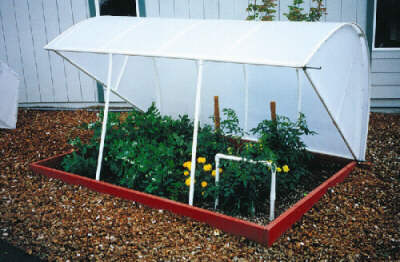
dirt2tableHowdy fellow plant, gardening and food lovers! This is a good time of year to start planning and even acquiring materials for a some possible projects for next years food production. One possible project that most of us could benefit from is something that could extend the food growing season both earlier in the spring, and later in the fall. I’m talking about a cold frame.

A cold frame doesn’t have to be expensive or elaborate to enable you to be eating garden fresh salads as early as February, and then next fall, all the way through October and into November! This article isn’t going to tell you how to build a cold frame, but if you do a Google search for “Cold Frames” and just look at the images tag, you will see hundreds of different ideas for cold frames from small and super easy to build, to high tech, high efficiency models that are closer to full blown greenhouses than cold frames. Somewhere on this spectrum might be something that is just right for your garden. You can also find free plans for simple cold frames with a Google search. Start thinking about where you could put one, and what materials you might already have or might need to obtain to get it built by the end of January. Then, when there is a January thaw, you can either prepare the soil where your cold frame will be or fill containers that you will put into your cold frame, and plant some lettuce, spinach, onions, kale, and other early salad crops. A few radishes would be good too.Cold-Frames-102

Next issue, we’ll talk about another project to work on during winter so you will be able to put it to use in the early spring. Yes, I mean Beekeeping.

Contact Tom King at tom.king@fairparkcommunity.org for more information.