Category Archives: Historic Buildings

Your Vote Counts: Fairpark Building Demolition

There will be a vote at the next Fairpark Community Council meeting (February 23, 6:30pm) on whether or not to write a letter of support to the state for the Utah State Fairpark_Admin_Bldg_09-21-01_KH

Fairpark to demolish two contributing structures which include:

  • The Administration Building – on the National Historic Register,
  • former DMV Testing Facility


The State wants to build the new Department of Agriculture building where those two buildings are now.

Read more here.

Save

Save

Save

29th Ward House Future Remains On Hold

DSC_1102Will Proposed Changes to Zoning Ordinances Increase Potential Construction Density of Historic Property? At the Fairpark Community Council’s December Meeting, the City’s Housing and Neighborhood Development Division provided some information on its request to rezone the property at 1102 West 400 North, the old, vacant, 29th LDS Ward House from low-density residential (R-1/7000) to higher density mixed residential and commercial use (R-MU-35). The property is owned by the City.

In the presentation, division director, Mike Ackerlow, explained that the rezoning request was to allow the City to secure resources to rehabilitate the 100-year old church so that it could be used for housing or some sort public or private commercial use. The City also wants build housing; i.e., small houses or apartment/condo units on other sections of the .80 acre property. Comment from residents at
the meeting would be used to help develop the final plans for the property that the division hoped to present to the Community Council in January.

In January, the Planning Division contacted the Fairpark CC to explain the City needed more time to final its plans.

Then, interestingly, at its January 28th meeting the Salt Lake City Planning Commission approved changes to the R-MU-35 zoning designation that allows greater building density by, among other things, decreasing the minimum
size for lots and decreasing minimal “set-backs” from lot boundary-lines.

The proposed changes to the R-MU-35 zoning designation still have to be approved by the City Council before they can go into effect. Whether the City is waiting for
the amended zoning designation before finalizing its plans remains to be seen. Regardless, the issue facing the Fairpark Community Council is whether it will support rezoning proposal for the 29th Ward property as the City’s petition goes before the Planning Commission and, ultimately, the City Council.

For more information visit fairparkcommunity.org

Fairpark Changes: A Resident Speaks Out

As a long-time resident of the Fairpark area, I have been asked many times why I would even want to live in “such an area”. The West side of SLC for years has been a less desirable address in the eyes of some people. However, it seems things are changing, and property in this area has shown a new interest. Just as other areas, such as the Marmalade District, have seen a resurgence of development, so, too, our area is on the cusp of development.photo 7

The type of development in our area is something with which the current residents should be concerned. It is one of the last near-downtown areas of the Valley that still has affordable homes and larger residential lots. We enjoy spending time in our yards and gardens and feeling that we are still close to the attractions of Salt Lake City such as arts, education, and civic events. However, changes are happening all around us. You only need to look at what has happened near the intersection of North Temple and 600 West. Hundreds of apartments and Condominiums have gone up, forcing out the few homes that used to exist there. It seems that when there is any land available near us, a developer wants to put in as many people as possible.

We have been fortunate that current Zoning laws in the Greater Fairpark area have kept this development restricted, and we can still enjoy our homes and neighborhoods. However, development is starting to spread its gaze here. churchscaledCurrently, the old 29th Ward church building on the corner of 400 North and 1100 West has stood vacant for many years. The LDS Church could not find a reasonable, affordable use for the building and deeded it to the City. Recently, the city Housing and Development agency held some meetings concerning the disposal of this property. It is listed as a City Historical Site, so there are limits as to what I can be used for. The Agency floated the concept of changing the Zoning on that parcel to make it more attractive for a buyer. This is a dangerous step, as once the Zoning has changed, (in this case, to a mixed-use residential and commercial use), anything that fits that zoning description could be built. The emphasis of the agency representatives seemed to be turning it into multi-family residences. The lot is so small that to make it cost effective, the homes would be multi-level and very small square footage (sound like high-density apartments?)

The general feeling of the residents attending the meeting was that other possibilities ought to be explored WITHOUT changing the zoning. There are certain variances that can be taken in using a Historic Building that would not require changing the zoning. Among those, using the building for a Professional Office, Arts Organization, Charter School, or something similar. The location is close enough to Downtown or I-15 to make it convenient for this type of use.

Why should we be concerned about it? Because once it is gone, it can’t be replaced. (Isn’t that the argument used by those who want Wilderness Areas and National Parks?) We live in a community that was built with families in mind, and for people who have long-term plans to stay in their homes here. There is nothing inherently wrong with rental units, but studies show that those who own and reside in their own homes have a greater interest in their communities and are more willing to work for the better good of the area. We must do all we can to preserve the quiet neighborhood we now enjoy.

It is important for any of us who have such long-term plans and a desire to 512px-Salt_Lake_City_and_County_Building_-_IMG_1751
keep our community “livable” to show interest in what is happening around us, and to become involved in any plans for the future. Before it is too late, let your voice be heard and let the City officials and developers know that this is a NICE neighborhood, and we want it to stay that way.

Roy Luker, Fairpark resident

29th Ward Building Rezone Hearing Postponed

At last month’s Council meeting (Dec. 4th) the City’s Planning and Housing and Neighborhood (HAND) Divisions began its presentation on the proposal to change the zoning designation of 29th LDS Ward House with the announcement that City staff was not seeking Community Council action that evening because they wanted to return in January with more concrete plans for the property.

Several days ago, the Planning Division notified the Fairpark Community Council that the City is not prepared to continue its presentation this month, that “more time is needed to develop plans for the site. The petition will not go before the Planning Commission until the revised plans have been presented at a future Fairpark Community Council meeting.”

29th Ward interior Currently, the 29th Ward property, a .80 acre lot at 1102 West 400 North, is zoned R-1/7000, as is most of the Fairpark Community – single residences on lots no smaller that 7000 square feet. The City wants to rezone the old building and property as R-MU-35 – a residential area that allows 30 units per acre, plus the possibility that some lots can be used for commercial purposes.

For a hundred years, the old 29th LDS Ward House has been an iconic structure in what is now known as the Fairpark Community. In the 1980s, the LDS Church donated the building to Salt Lake City to be used to house various programs serving the City’s refugee population. Unfortunately, a fire in 1983 gutted part of the building’s interior, creating a serious challenge maintaining the building’s usefulness. And, since the early 1990s, the building has been vacant – boarded up and an eyesore for the community. (See the article on the history of this building here.).29th Ward 1920

In the initial letter from the Mayor’s Office to the Planning Commission requesting the the zoning change, the administration emphasized its philosophy of making “adaptive” reuse of historic buildings in the City. In this regard, the City has applied to have the old 29th Ward House listed in the National Historical Registry. The building is already listed on the City’s registry of significant historical and cultural landmarks; but the federal designation will make the building eligible for tax credits and other resources for repair and restoration efforts.

But in the initial presentation by Michael Akerlow, Director of the City’s Housing and Neighbor Development Division, at the Fairpark Council’s December meeting, the City’s goal of creating more “diverse and affordable” was emphasized. In the evening’s discussion, the City was unwilling to commit to any specific plan, however the idea of building new residential units on the parking lot north of the building and creating residential units in the old building was raised.

It seemed that the City’s position is that, without federal money/tax-credits to cover part of the cost for the rehab of the old church along with the revenue new housing units from the construction of new residences (condos or apartments) to help pay for the rehab of the church , the property will not be attractive to developers.

The old 29th LDS Ward House is both a treasure and scourge. In its dilapidated state today, it reflects negatively on the larger community. On the other hand, its basic structure, a hundred years old, is attractive as an icon of this community’s history.

For decades, residents of what is now the Fairpark Community have fought, via Master Plans and Zoning Maps, to the protect the residential nature of our neighborhoods. With the City’s proposal to change the zoning designation of the 29th Ward Building, the community is confronted with a choice: allow high density development to restore a historic building or allow the property to continue to deteriorate.

29th LDS Ward House: 100 Years

by Steve Johnson, Fairpark Community Council Chair

Photo1910This photo, taken around 1910, shows an isolated church in a bare field with a dirt road to the side. This early image of the 29th LDS Ward House shows a building that is, today, the vacant, boarded up Ward House we see at 1102 West 400 North.

Construction of the building began one hundred years ago, 1904, to provide a place of worship and social activities for the 29th LDS ward, organized in 1902.

As stated in the 1982 application to have the building listed in the Salt Lake City Register for Cultural Resources, “The twenty-ninth ward served as an entertainment and social activities hub for the northwest community, which was undeveloped and scattered until the early 1950s.”

This role was demonstrated with the 1925 construction of a wing that included a recreation room and the 1926 purchase of two 35-millimeter film projectors. As stated in the 1982 application, with this purchase “the ward became a particular focus for entertainment, especially during the Depression years….”

By the early 1980s, the building was vacant; its role as an LDS Ward House had ended.

The vacant Ward House returned to serving the community when the LDS Church donated it to house the New Hope Multicultural Center. The New Hope Center was established in 1985 by Betty North – a long-time volunteer who worked with refugees. Her vision of the center was one of a place where refugees, many of them living in what is now the Fairpark Community, could get food assistance, clothing, and household items. Old Sunday school rooms were now sites for English as a second language and other classes on skills to help refugees integrate into Utah society.

In September 1986, just one month shy of its first year anniversary, the organization experienced a serious set-back when a fire damaged several rooms and the materials in them. Betty North vowed to keep programs going, and she did; but the fire damage added to people’s realization that the cost of operating and maintaining the old building was going to be a major challenge.

This old Ward House did more than just house the New Hope Multicultural Center. For a number of years, it was the headquarters of the Wasatch Fish and Garden Program – today’s Wasatch Community Gardens. Back then, the organization focused on several large community gardens and ran the fish co-op. A couple of times a month, the parking lot would fill with people, mostly refugees, holding buckets. When it was their turn, live carp that had been netted in Utah Lake, would be scooped up from large tanks and poured into each person’s bucket.

For several years, it was the first Westside location for a Women, Infant, and Children (WIC) food program clinic.

And 29th Ward House again became a place of worship as several refugee groups conducted church services in their own languages, continuing the religious practices they had left in their homelands.

The Ward House recreation hall also provided space for dances, celebrations of holidays observed in home countries and other social events.

With the involvement of many volunteers, the donation of food and household supplies, especially from the LDS Church, and small grants, the New Hope Multicultural Center continued to serve the community’s refugee populations well into the 1990s.

In the end, many of the services offered by the New Hope Multicultural Center were being provided by other organizations receiving government grants. The burden of keeping the old Ward House functioning was also simply overwhelming the organization’s finances. As a result, in the 1990s, the 29th Ward House became vacant once again and the property remained owned by Salt Lake City.

It also appears that the 29th Ward House’s story might not yet be over. As noted elsewhere, the City is hoping to change the property’s zoning designation from R-1/7000 (residential) to R-MU-35 (mixed use – commercial and residential). The City is also preparing an application to have the building listed in the National Historic Registry.

According to the City, both of the above actions are intended to make the building more attractive to developers.

Fairpark Community residents should plan to attend the public hearing on December 4th and contribute to the next chapter of the 29th Ward House.

OPEN HOUSE – 29th Ward House Rezone & Master Plan Amendment Proposal

Date: Thursday November 20th
Location: Northwest Recreation Center-Party Room, 1300 West 300 North Salt Lake City, UT 84116
Time: 4:30pm – 6:30pm, open house format, drop-in any time during these hours.

29thwardThe Salt Lake City Planning Division, on behalf of the Housing and Neighborhood Development Division, is looking at the appropriateness of rezoning the property located at 1102 West 400 North as part of a process to expand opportunities to find a desired adaptive reuse for the vacant historic property. The rezone will also require an amendment to the Northwest Community Master Plan and future land use map. This City-owned property is the 29th Ward House, formerly the New Hope Center, and is a designated Landmark Site on the Salt Lake City Register of Cultural Resources.

This open house is only one of the first steps in the public process and there will be other opportunities to comment on the proposal. We value your input and encourage you to participate by voicing support or concerns that you may have in regards to the proposed changes.

If you have questions or comments please contact Amy Thompson, Associate Planner, Salt Lake City Planning Division at 801·535·7281 or e-mail amy.thompson@slcgov.com.

The Horsley Building Resurrection

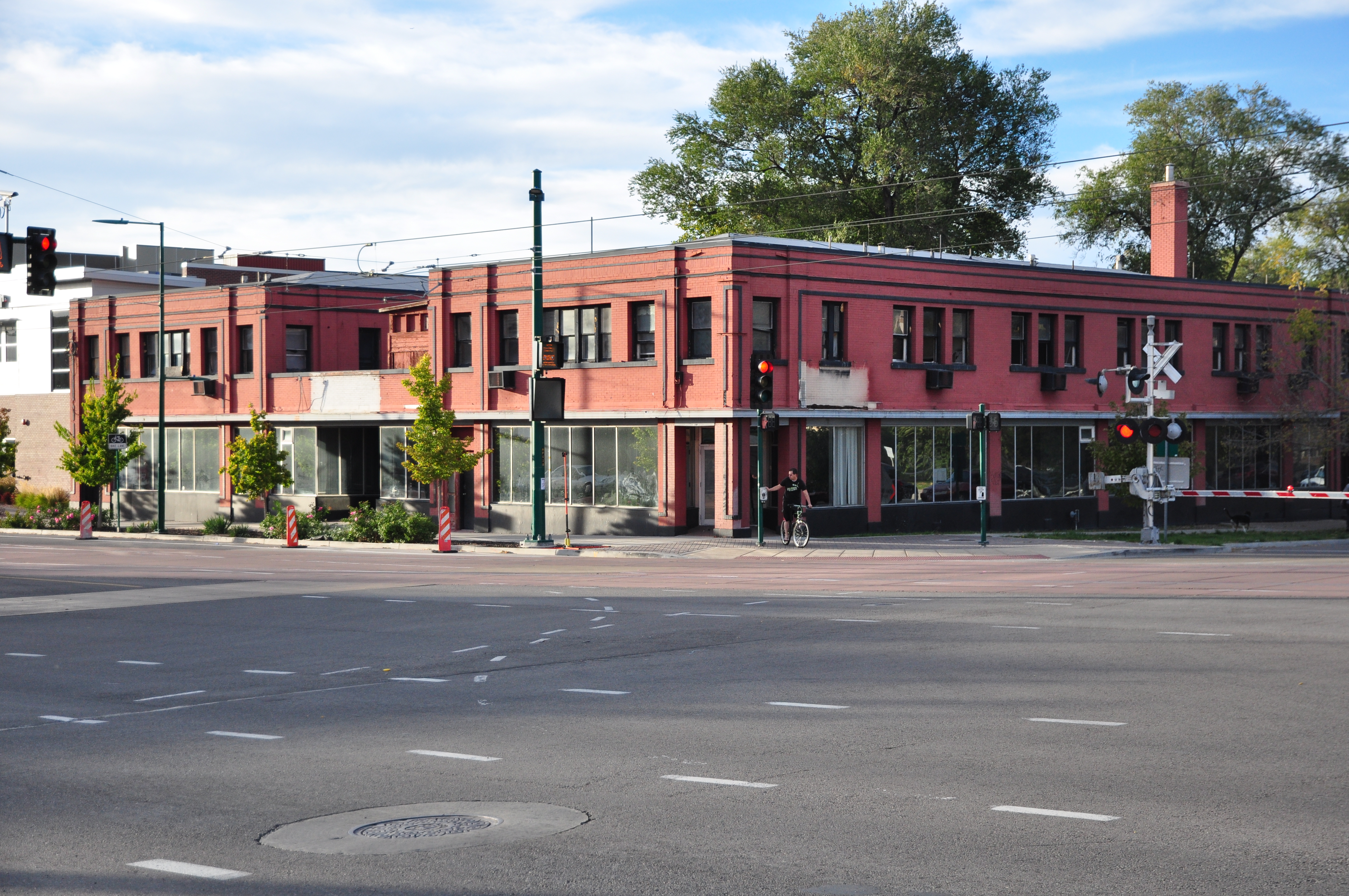
DSC_1099Descending in your car on the west side of the North Temple viaduct, you can’t but notice the two-story brick building on the northwest corner of 600 West and North Temple.

Most people are likely to remember the building as the location where, formerly occupied by BIOMAT, people sold their blood. People may have noticed that the building has been vacant for a year or so. The building seemed to be a candidate for demolition. It nearly was demolished a couple of years ago and that would have been a significant loss for the Fairpark Community, for the Westside, and for the City.

Reaching an age of 102 years, this building, known as the Horsley Building is the oldest commercial building west of the railroad tracks along North Temple. 

Interestingly, nearly one-third of historic commercial buildings in the Salt Lake Northwest Historic District located in the Fairpark area, combined commercial space with residential space, and the Horsley building is an example of this practice.

This building was built in 1912 by John W. Horsley to house his business on the ground story. The building resembles a small hotel court in the commercial style with retail space on the main floor and 16 apartments on the second. Horsley rented space that his department store did not occupy on the first floor to other businesses: a shoe repair shop, a barber named Isaac Lee, Ingleby Dry Goods and Bridge Drug.

On the second-floor were the apartments with a separate entrance from the retail stores. Six of the 12 apartments served as a home for John Horsley’s family: his wife, Inga, and their son Rulon and two of Inga’s six children from a previous marriage. The remaining 6 apartments in the building were occupied by three other couples.

Read more about the Salt Lake City Northwest Historic District (the area between 500 and 1000 West and North Temple and 600 North) here.

The Horsley family moved out of the apartments sometime before the 1920 Salt_Lake_Public_Library_Chapman_Branchcensus. The census does show that the 12 apartments in the Horsley Building housed a total of 35 people comprised of 12 couples and their families.

People may be surprised to learn that, from 1912 to 1917, the Horsley Building housed the Chapman Branch of the Salt Lake City Library. The library moved to its current location when it received a $25,000 grant from Carnegie Foundation.

Horsleys_Department_Store_Interior_at_NightRecords show that through ’20s and into the ’30s, the retail stores in the building were fairly stable. Then, records from 1940 list three retail stores: Ingleby Dry Goods, Bridge Drug, and the Cashis King that sold meat and groceries. The Horsley Department Store was not on the list because, by 1940, the store no longer existed. Although his store was gone, David Horsley remained, with his new wife, Estella, to manage the building (he and Inga divorced in the late ’20s).

The retail space was remodeled in 1947, but by 1950, the long-time retail Horsleys_Butcher_Choptenants were gone and, that same year, David Horsley deeded the property to his son, Rulon.

The storefronts were now occupied by Salt Lake Frozen Food Lockers and Bargain City. After another remodel in 1955, the building retail space was shared by the Salt Lake Frozen Foods and the M&M Market. But these times were difficult for the Horsley Building. By 1960, the storefronts were vacant and the apartments were known as the “Se Rancho Motel Annex Apartments”.

The storefronts remained vacant through the 1960s.

In the early 1970s the Bargain Basket Grocery, Inc., leased the building‟s retail space. This is the time best remembered by people raised in surrounding neighborhoods as part of the “boomer” generation.

Anna Giron, who has lived all of her life in, or near to, what is now the named Guadalupe Neighborhood (North Temple to 600 North; 500 West to I-15) remembers the Horsley Building as part of a thriving commercial area, now mostly gone, that stretched, west of the viaduct and railroad tracks, along North Temple that included the Arcade Theater, Rancho Lanes bowling and café, a number of small “mom and pop” cafes, Dee‟s drive-in, and the Safeway Grocery store that was located in the building that later became the Wonder Bread Store (now Furst Construction Company).

Anna remembers that people didn’t do their major grocery shopping at the Bargain Basket; they went to Safeway. The Bargain Basket was more of a convenient store. She emphasizes that the Horsley Building was a real part of her neighborhood. It wasn’t just the Bargain Basket, but also the people who lived in the upstairs apartments. “On summer nights, all of apartment windows would be lit up with people sitting on the window sills, smoking and talking with their neighbors.”

While some of the apartments continued to be used as part of the Se Rancho Motel, The Bargain Basket was gone and the storefronts remained vacant through the 1980s.

In 1990, the property was purchased by America Plasma Management, Inc. and the retail space was remodeled to house the BIO-MAT Blood Donation Center. The now vacant apartments were used for storage. This purchase did, after a decade of being vacant, bring the Horsley Building back to life; it also almost led to the building‟s demise.

Around 2009, the Texas-based owner (now Grifols—a company that uses blood plasma to develop, and market, medical products) announced its intention to build a new, larger building, on the property directly west of the Horsley Building. At the same time, it filed a request with the City for a permit to demolish the Horsley Building to create a parking lot for its new building.

Ultimately, the Planning Commission denied the request, citing the building‟s historical status. People were alarmed that this unique link with the communities past could be gone. The request for a demolition permit was especially tracked by Neighbor Works Salt Lake (NWSL), a nonprofit organization with its primary office located in the Fairpark Community. It was NWSL that informed other organizations, including the Fairpark Community Council, of the owner‟s intention.

NWSL’s executive director, Maria Garcias, explains that her organization has been concerned with the future of the building for many years, “We believed that the historic Horsley building could be rehabbed and, then, house organizations and programs that would be an asset to the community.”

NWSL urged the owner to donate the building to a nonprofit organization. This did not happen. NWSL also made several offers to purchase the building, hoping to partner with the University of Utah to house educational and community development programs. The price set by the owner, coupled with the costs of rehabilitation, prevented this from happening.

Even though the building avoided being demolished, we remained concerned with how the building would be used in the future.”

BIO-MAT Blod Donation Center moved to its new building in July 2011.  With fewer than 12 months before reaching its 100th year, the Horsley Building was again vacant.

It is interesting to note that, for a period of time, the oldest and newest commercial buildings on West North Temple stood side-by-side.

This year, the building’s future took a positive turn with its purchase by Randell Farrrell. Mr. Farrel plans to develop it to include apartments, along with art studios and other “creative spaces.”

Maria Garcias expresses the hope that Mr. Farrell can adhere to this vision, stating that NWSL has met with him a number of times, “We are working closely with him to make sure he is connected with the programs that could support his efforts.”

With its apartments and retail space, occupied or vacant, the Horsley Building has, through the decades, been part of what defines the Fairpark Community. It appears that this role will continue in future years.

Most of the information on the Horsley building’s past was drawn from the 2000 application to list the building on the National Historic Register, authored by Korral Broschinsky.
State Fairpark Update

Fairpark board wants to pursue discussions with Hansen,
RSL Published on Sep 22, 2014 05:21PM The Utah State Fairpark
board is eager to pursue a partnership with Dell Loy Hansen and
Real Salt Lake. That much is clear. But if the club’s owner and
the Fairpark are to officially enter contract negotiations regarding
the building of a potential minor-league soccer stadium to house
the club’s USL Pro team, the Real Monarchs, other developments
need to progress. Fairpark executive director Michael Steele said
Monday the board came away extremely impressed after Hansen
made his pitch on Sept. 10.

“I haven’t heard really of any detractors,” Steele said. “It’s about
getting the correct deal for the team and the Fairpark.” The Utah
State Fairpark Corporation’s lease on the Fairpark grounds
expires on June 30, 2017, but upgrades on facilities within the
park need to be made for the longevity of the grounds.

fair parkSteele said per the terms of the lease, any improvements made
on the grounds over $100,000 immediately become property of
the state of Utah. Which means Hansen’s potential stadium —
after the planned 40-to-50-year-lease — would be donated to the
Fairpark Corporation and then become an asset of the state. Now, it’s ensuring the landmark deal benefits the Fairpark and its long-term survival. “The board wants to pursue this and that was right from the meeting,” Steele said. “They want to pursue discussions with Real and Dell Loy…but by no means will this soccer complex save the Utah State Fairpark.  It will help.

“Steele said the rodeo grounds must be renovated and an expo
center must be constructed to help boost the overall versatility of
the Fairpark.

Located a few blocks west of downtown Salt Lake City, the
Fairpark has been in discussion with the state on extending its
lease on the 65 acres despite decades of dealing with struggles
and lack of funding to maintain the historic buildings. Hansen’s
stadium pitch — estimated to be as much as $18 million —
would be paid for solely out of his own pocket, which would allow
the Fairpark to avoid needing taxpayer money for upgrades or
subsidies from the state.

The stadium, which would feature artificial turf, is expected to
seat 6-to-8,000 and be ready for the Monarchs to begin play in
2016. In the mean time, Steele anticipates further negotiation
with Hansen, Gov. Herbert and the legislature to continue in the
next couple of weeks. While the Fairpark board wants to engage
in official discussions with RSL, the next part of the process turns
to the nailing down how a new master plan of the grounds can
generate revenue and impact business along 10th West and North
Temple.