
Salt Lake residents attend the press conference at the Utah State Fairpark, called my Mayor Ralph Becker. (Photos by Tom King)
Salt Lake City residents said “No!” to moving the State Prison to the city. Read more in the linked articles below.


Salt Lake residents attend the press conference at the Utah State Fairpark, called my Mayor Ralph Becker. (Photos by Tom King)
Salt Lake City residents said “No!” to moving the State Prison to the city. Read more in the linked articles below.

On Tuesday evening, Mayor Becker’s Office will hold a meeting for anyone who is interested in joining Salt Lake City’s efforts. The Mayor will explain to State leaders why the two Salt Lake City options should be taken off the list. The meeting will be held Tuesday, December 16 at 5:30 p.m., City & County Building, Room 326.
The next meeting of the State Prison Relocation Commission is December 22 at 2:00 p.m. in Room 210 of the Senate Building at the Utah State Capitol. Please note, public comment is not scheduled to be taken during this meeting but the public is welcome to attend. Opportunity for public comment will be outlined during the meeting.
You can start voicing your concerns now by emailing or calling commission members. Tell State leaders why the Salt Lake City options should be taken off the table!
Prison Relocation Commission Members:
Sen. Jerry W. Stevenson (R), Chair
Rep. Brad R. Wilson (R), Chair
Sen. Karen Mayne (D)
Sen. Evan J. Vickers (R)
Rep. Gregory H. Hughes (R)
Rep. Eric K. Hutchings (R)
Rep. Mark A. Wheatley (D)
Rollin Cook, Executive Director, Utah Department of Corrections
Ron Gordon, Agency Head, Bureau of Justice Agencies
Bryant R. Howe, Assistant Director
Robert H. Rees, Associate General Counsel
Brian J. Bean, Policy Analyst
Sara J. Thomas, Legislative Secretary
View the Administration’s detailed analysis of the proposed Salt Lake City sites and why the City has concluded the State Prison NOT move to Salt Lake City.
View the Prison Relocation Commission’s reports on the prison site selection criteria and status on the Utah Department of Corrections website.
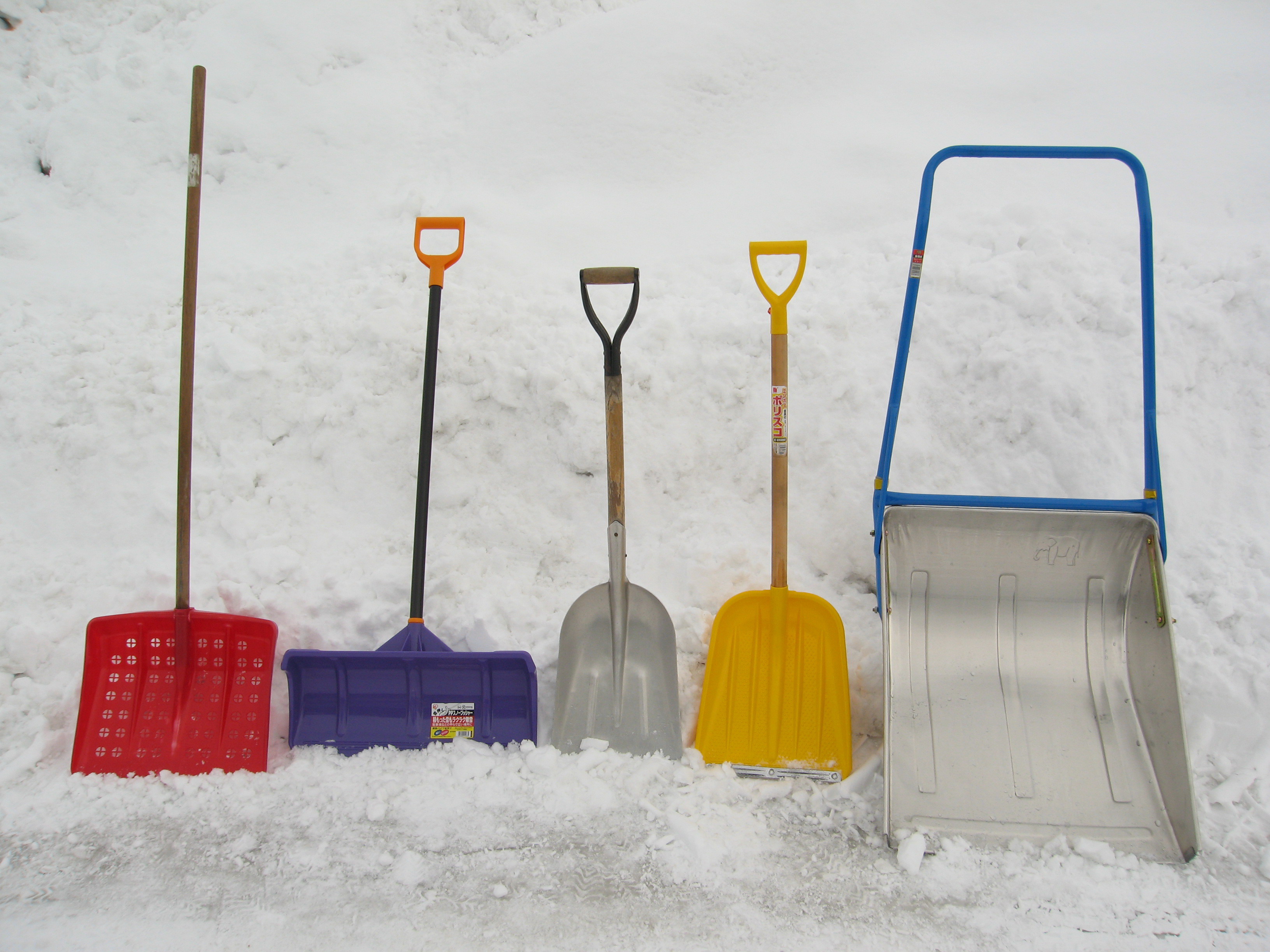
It feels like spring outside but we are bound to get some snow this winter. To that end, now is the time to know the ordinance for snow removal in Salt Lake City.
Everything you ever wanted to know about snow removal and more can be found here.
 Here’s the scoop that is being circulated in an advisory to SLC residents:
When it snows, Salt lake City Code 14.20.070 requires that you:
Residents are subject to daily fines for a civil violation for failure to comply the these ordinances.
If you have any questions, please contact Salt Lake City Civil Enforcement at civilenforcement@slcgov.com or (801) 535-7225. Or visit the snow removal information pages here.


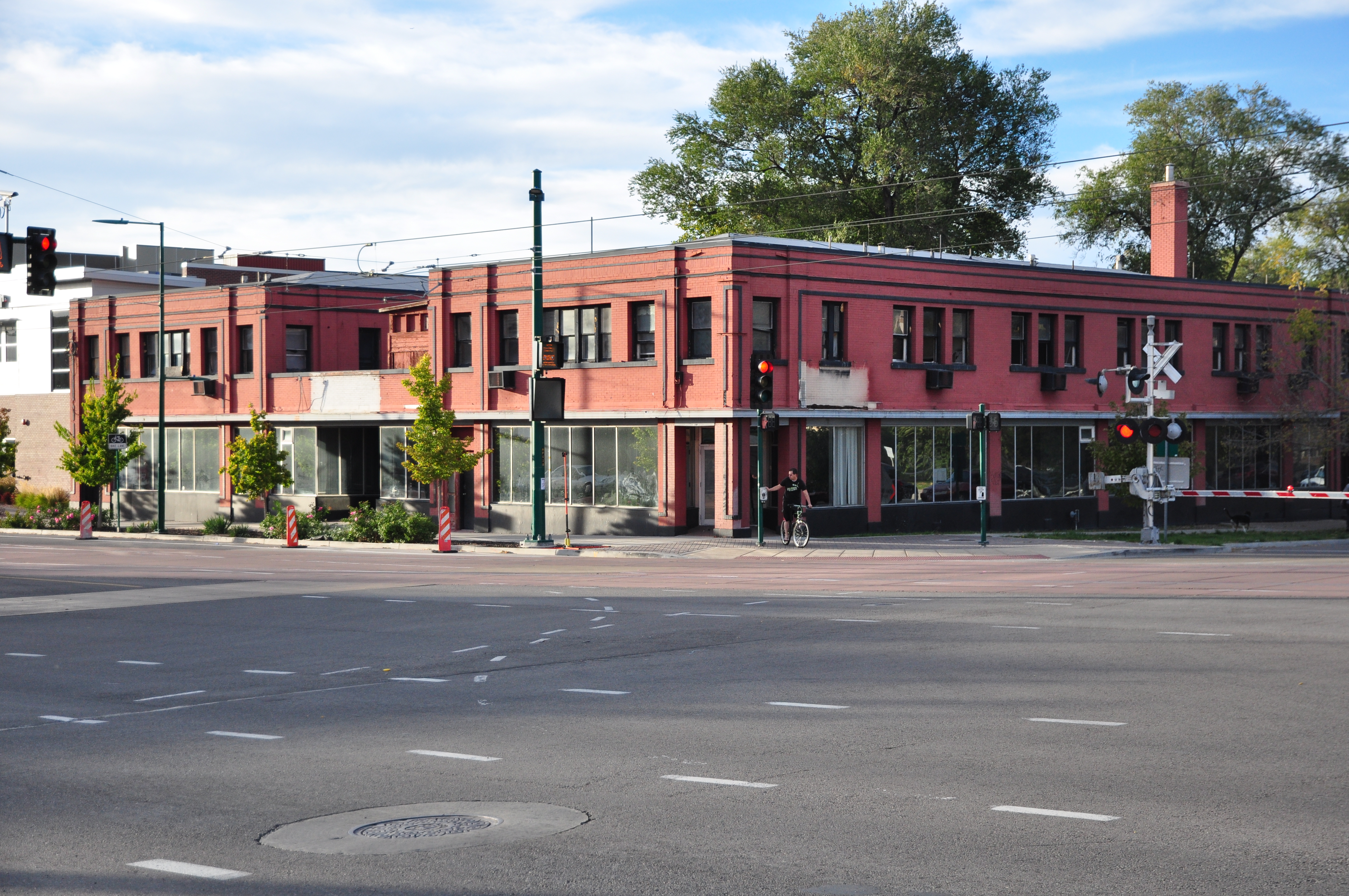
Descending in your car on the west side of the North Temple viaduct, you can’t but notice the two-story brick building on the northwest corner of 600 West and North Temple.
Most people are likely to remember the building as the location where, formerly occupied by BIOMAT, people sold their blood. People may have noticed that the building has been vacant for a year or so. The building seemed to be a candidate for demolition. It nearly was demolished a couple of years ago and that would have been a significant loss for the Fairpark Community, for the Westside, and for the City.
Reaching an age of 102 years, this building, known as the Horsley Building is the oldest commercial building west of the railroad tracks along North Temple.
Interestingly, nearly one-third of historic commercial buildings in the Salt Lake Northwest Historic District located in the Fairpark area, combined commercial space with residential space, and the Horsley building is an example of this practice.
This building was built in 1912 by John W. Horsley to house his business on the ground story. The building resembles a small hotel court in the commercial style with retail space on the main floor and 16 apartments on the second. Horsley rented space that his department store did not occupy on the first floor to other businesses: a shoe repair shop, a barber named Isaac Lee, Ingleby Dry Goods and Bridge Drug.
On the second-floor were the apartments with a separate entrance from the retail stores. Six of the 12 apartments served as a home for John Horsley’s family: his wife, Inga, and their son Rulon and two of Inga’s six children from a previous marriage. The remaining 6 apartments in the building were occupied by three other couples.
Read more about the Salt Lake City Northwest Historic District (the area between 500 and 1000 West and North Temple and 600 North) here.
The Horsley family moved out of the apartments sometime before the 1920  census. The census does show that the 12 apartments in the Horsley Building housed a total of 35 people comprised of 12 couples and their families.
People may be surprised to learn that, from 1912 to 1917, the Horsley Building housed the Chapman Branch of the Salt Lake City Library. The library moved to its current location when it received a $25,000 grant from Carnegie Foundation.
 Records show that through ’20s and into the ’30s, the retail stores in the building were fairly stable. Then, records from 1940 list three retail stores: Ingleby Dry Goods, Bridge Drug, and the Cashis King that sold meat and groceries. The Horsley Department Store was not on the list because, by 1940, the store no longer existed. Although his store was gone, David Horsley remained, with his new wife, Estella, to manage the building (he and Inga divorced in the late ’20s).
The retail space was remodeled in 1947, but by 1950, the long-time retail  tenants were gone and, that same year, David Horsley deeded the property to his son, Rulon.
The storefronts were now occupied by Salt Lake Frozen Food Lockers and Bargain City. After another remodel in 1955, the building retail space was shared by the Salt Lake Frozen Foods and the M&M Market. But these times were difficult for the Horsley Building. By 1960, the storefronts were vacant and the apartments were known as the “Se Rancho Motel Annex Apartments”.
The storefronts remained vacant through the 1960s.
In the early 1970s the Bargain Basket Grocery, Inc., leased the building‟s retail space. This is the time best remembered by people raised in surrounding neighborhoods as part of the “boomer” generation.
Anna Giron, who has lived all of her life in, or near to, what is now the named Guadalupe Neighborhood (North Temple to 600 North; 500 West to I-15) remembers the Horsley Building as part of a thriving commercial area, now mostly gone, that stretched, west of the viaduct and railroad tracks, along North Temple that included the Arcade Theater, Rancho Lanes bowling and café, a number of small “mom and pop” cafes, Dee‟s drive-in, and the Safeway Grocery store that was located in the building that later became the Wonder Bread Store (now Furst Construction Company).
Anna remembers that people didn’t do their major grocery shopping at the Bargain Basket; they went to Safeway. The Bargain Basket was more of a convenient store. She emphasizes that the Horsley Building was a real part of her neighborhood. It wasn’t just the Bargain Basket, but also the people who lived in the upstairs apartments. “On summer nights, all of apartment windows would be lit up with people sitting on the window sills, smoking and talking with their neighbors.”
While some of the apartments continued to be used as part of the Se Rancho Motel, The Bargain Basket was gone and the storefronts remained vacant through the 1980s.
In 1990, the property was purchased by America Plasma Management, Inc. and the retail space was remodeled to house the BIO-MAT Blood Donation Center. The now vacant apartments were used for storage. This purchase did, after a decade of being vacant, bring the Horsley Building back to life; it also almost led to the building‟s demise.
Around 2009, the Texas-based owner (now Grifols—a company that uses blood plasma to develop, and market, medical products) announced its intention to build a new, larger building, on the property directly west of the Horsley Building. At the same time, it filed a request with the City for a permit to demolish the Horsley Building to create a parking lot for its new building.
Ultimately, the Planning Commission denied the request, citing the building‟s historical status. People were alarmed that this unique link with the communities past could be gone. The request for a demolition permit was especially tracked by Neighbor Works Salt Lake (NWSL), a nonprofit organization with its primary office located in the Fairpark Community. It was NWSL that informed other organizations, including the Fairpark Community Council, of the owner‟s intention.
NWSL’s executive director, Maria Garcias, explains that her organization has been concerned with the future of the building for many years, “We believed that the historic Horsley building could be rehabbed and, then, house organizations and programs that would be an asset to the community.”
NWSL urged the owner to donate the building to a nonprofit organization. This did not happen. NWSL also made several offers to purchase the building, hoping to partner with the University of Utah to house educational and community development programs. The price set by the owner, coupled with the costs of rehabilitation, prevented this from happening.
“Even though the building avoided being demolished, we remained concerned with how the building would be used in the future.”
BIO-MAT Blod Donation Center moved to its new building in July 2011. With fewer than 12 months before reaching its 100th year, the Horsley Building was again vacant.
It is interesting to note that, for a period of time, the oldest and newest commercial buildings on West North Temple stood side-by-side.
This year, the building’s future took a positive turn with its purchase by Randell Farrrell. Mr. Farrel plans to develop it to include apartments, along with art studios and other “creative spaces.”
Maria Garcias expresses the hope that Mr. Farrell can adhere to this vision, stating that NWSL has met with him a number of times, “We are working closely with him to make sure he is connected with the programs that could support his efforts.”
With its apartments and retail space, occupied or vacant, the Horsley Building has, through the decades, been part of what defines the Fairpark Community. It appears that this role will continue in future years.
Most of the information on the Horsley building’s past was drawn from the 2000 application to list the building on the National Historic Register, authored by Korral Broschinsky.